Modernizing financial services through connected technology
Financial institutions are under increasing pressure to operate more efficiently, maintain accurate financial records, deliver better customer experiences, and respond to changing regulatory and operational requirements. For institutions managing member contributions, investments, loans, and other financial activities, these responsibilities can become particularly complex.
As membership grows and transaction volumes increase, institutions require technology that can connect financial operations, automate repetitive processes, and provide reliable information for decision-making.
At Access 89, we believe meaningful digital transformation begins by understanding how organizations operate and engineering technology that addresses their real business challenges.
This philosophy is reflected in our ongoing partnership with CCT Fund, a Ghanaian member-based financial institution serving more than 26,000 members and managing substantial financial resources. Access 89 was engaged to develop and implement an integrated enterprise technology platform that would bring together the institution’s core financial and administrative functions.
The project encompasses fund management, portfolio management, accounting, human resources, and payroll, supported by digital workflows, financial reporting, and systems integration. Our objective was to help CCT Fund move toward a more connected operating environment in which financial information, member records, and administrative processes could be managed through a unified platform.
The engagement represents more than an enterprise software implementation. It demonstrates how purpose-built technology can help financial institutions strengthen operational control, improve service delivery, and establish the foundations for sustainable growth.
The challenge: managing complex financial operations at scale
Managing a member-based financial institution involves coordinating several interconnected activities. Member contributions must be accurately recorded, investment balances maintained, loan portfolios monitored, withdrawals processed, and financial transactions reconciled. At the same time, the institution must maintain reliable accounting records, manage employees, administer payroll, and generate reports for management and other stakeholders.
Each activity depends on accurate information. A contribution recorded in the fund management system may affect a member’s balance, the institution’s financial position, and subsequent reporting. A loan disbursement must be reflected in the loan portfolio, accounting records, and relevant member information. Similarly, repayments, withdrawals, investment gains, and other transactions must be accurately processed and reconciled.
When these functions operate through disconnected applications, spreadsheets, or manual workflows, maintaining consistency becomes increasingly difficult. Information may need to be entered multiple times, reconciliations can become time-consuming, and management teams may struggle to obtain a consolidated view of financial and operational performance.
For an institution serving more than 26,000 members, these challenges make the need for connected technology particularly important. CCT Fund’s digital transformation initiative sought to address this complexity by establishing an integrated technology environment capable of supporting its financial and administrative operations.
Engineering an integrated fund management platform
Access 89 approached the engagement by designing and developing a platform around CCT Fund’s operational requirements. Rather than implementing isolated applications for individual departments, the project focused on connecting the institution’s core business functions within an integrated enterprise system.
The platform brings together five principal areas: fund management, portfolio management, accounting, human resources, and payroll.
Digitizing member and fund management
At the heart of CCT Fund’s operations is the management of member financial information. With a membership base exceeding 26,000, maintaining accurate records of contributions, withdrawals, balances, and other financial activities is essential.
The fund management capabilities were developed to support the structured administration of member accounts and financial transactions. This includes managing member information, recording contributions, tracking withdrawals, and maintaining the financial records associated with members’ participation in the fund.
Digitizing these processes creates a more consistent foundation for managing member financial information and reduces dependence on fragmented records. It also supports the generation of contribution reports and other financial information required for operational management.
Connecting investment and loan portfolio management
Fund management institutions must maintain visibility into how financial resources are allocated, invested, and recovered. For CCT Fund, the platform’s portfolio management capabilities address the administration of investments and lending activities.
These capabilities support the recording and management of investment information, loan balances, repayments, and related financial transactions. By bringing these activities into a connected digital environment, the institution can maintain more structured records of its financial portfolio. This also creates opportunities to improve portfolio monitoring, financial reporting, and management oversight.
Integrating accounting and financial operations
Accurate accounting is fundamental to the integrity of any financial institution. Financial activities must be recorded consistently and reflected in the institution’s general ledger and financial statements.
As part of the CCT Fund engagement, Access 89 developed accounting capabilities designed to connect financial operations with the broader enterprise platform. The implementation includes general ledger functionality, financial transaction processing, bank reconciliation, and reporting capabilities. This helps establish a more integrated relationship between operational transactions and financial records.
For management teams, the objective is to improve financial visibility while reducing the administrative effort required to consolidate information from different systems.
Modernizing human resources and payroll
Financial institutions depend on effective internal administration as much as they depend on reliable financial systems. Employee records, payroll processing, and related administrative activities must be managed accurately and consistently.
The CCT Fund platform therefore extends beyond financial operations to include human resources and payroll management. By incorporating these capabilities into the broader enterprise system, Access 89 is helping establish a more connected environment for managing both financial and administrative activities. This reflects our approach to enterprise digital transformation: building technology around the complete operating requirements of the organization rather than addressing departments in isolation.
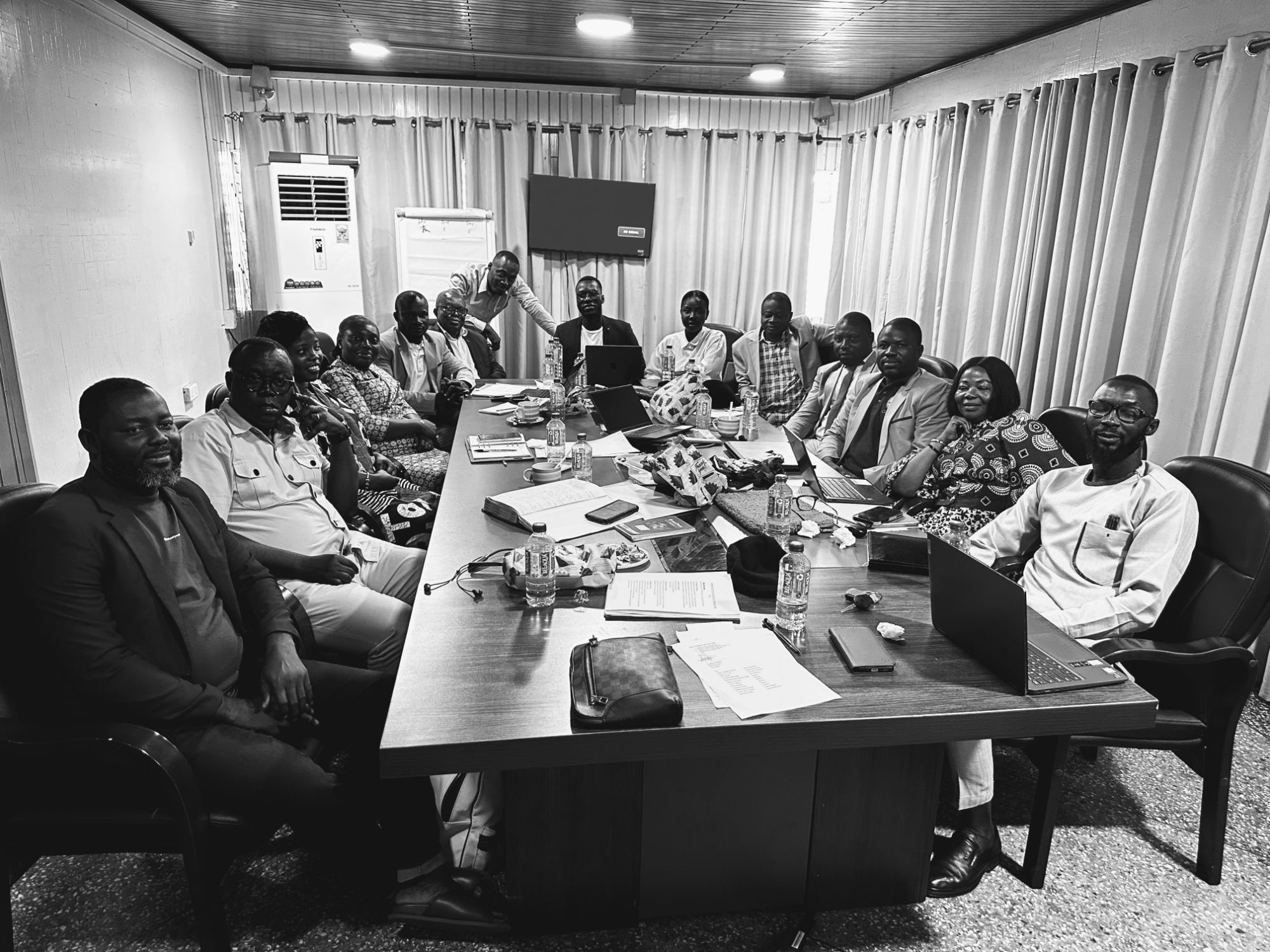
The engagement represents more than an enterprise software implementation. It demonstrates how purpose-built technology can help financial institutions strengthen operational control, improve service delivery, and establish the foundations for sustainable growth.
Bringing historical financial information into a modern digital environment
One of the most important and technically demanding aspects of enterprise digital transformation is data migration. Financial institutions often maintain years of historical records across different systems, spreadsheets, and databases. These records contain essential information about member accounts, contributions, investments, loan balances, repayments, and financial transactions. Migrating this information requires careful attention to accuracy, completeness, and reconciliation.
For CCT Fund, Access 89’s work has included the migration and validation of historical financial and member information. The process has involved preparing and incorporating records covering contributions, withdrawals, investment balances, loans, repayments, and related financial activities.
This work is particularly important because the reliability of a new financial system depends on the integrity of the information it contains. A modern platform cannot deliver meaningful operational improvements if historical balances are incomplete or inconsistent.
Our approach has therefore included working with CCT Fund to address data requirements, reconcile information, and support the transition toward the integrated platform. The engagement illustrates why enterprise transformation requires more than software development. It also demands a detailed understanding of existing business processes, financial records, and the relationships between different types of operational data.
Improving financial visibility and operational control
One of the central objectives of the CCT Fund transformation is to improve the institution’s ability to understand and manage its financial operations. In a member-based financial institution, information flows continuously between contributions, investments, lending, withdrawals, and accounting. When these processes are disconnected, management teams may need to consolidate information manually before they can obtain a complete view of the institution’s financial position.
An integrated platform provides a foundation for bringing this information together. Through connected fund management, portfolio management, and accounting capabilities, CCT Fund is moving toward a more structured approach to financial information management. This supports the institution’s ability to review transactions, monitor balances, reconcile financial records, and generate operational reports.
It also creates opportunities to strengthen internal controls by maintaining more consistent transaction histories and approval processes. For institutions responsible for managing members’ financial resources, these capabilities are essential to effective governance and accountability.
The broader objective is to make financial information more accessible, reliable, and useful for day-to-day management.
Automating financial workflows and reducing administrative complexity
Financial institutions frequently perform repetitive administrative activities that consume time and operational resources. These may include recording contributions, processing transactions, preparing financial reports, reviewing payment information, and reconciling bank statements. When performed manually, such activities can introduce delays and increase the risk of errors.
Access 89’s work with CCT Fund includes the development and refinement of digital workflows designed to make these processes more structured. For example, reconciliation capabilities help financial teams compare and manage transaction records, while reporting functions support the extraction and review of financial information.
The platform has also been enhanced to address practical operational requirements such as bulk transaction processing, approval workflows, and financial data exports. These improvements reflect the importance of developing enterprise technology around how users actually work. Rather than requiring staff to adapt entirely to rigid software processes, the platform is being refined to accommodate the institution’s operational requirements.
The expected benefit is a reduction in unnecessary administrative complexity and greater consistency in how financial activities are processed.
Supporting a better experience for members
Although much of the transformation focuses on internal operations, its long-term value also extends to the members served by CCT Fund. Members depend on the institution to maintain accurate records of their contributions, investments, loans, and withdrawals. They also expect financial transactions to be processed reliably and their account information to remain accurate.
By modernizing the systems supporting these activities, CCT Fund is establishing a stronger foundation for member service delivery. Connected member records and financial workflows can help staff respond to enquiries more efficiently and maintain a clearer view of individual account activity.
The project has also included work on a digital fund management portal and USSD-related service workflows. These capabilities reflect the opportunity to make selected financial services more accessible through digital channels. As the platform evolves, such channels can support more convenient interactions between the institution and its members, subject to the services made available.
For Access 89, this is an important aspect of financial technology: improving the systems behind financial services so that institutions can ultimately deliver better experiences to the people they serve.
A transformation built through collaboration
Complex enterprise technology projects require close collaboration between engineering teams and the organizations they support. Financial systems must reflect the institution’s policies, transaction rules, approval structures, and reporting requirements. They must also accommodate historical information and integrate with existing operational processes.
Our engagement with CCT Fund has involved requirements gathering, solution design, platform development, testing, data migration, training, and ongoing enhancement. The project progressed through formal requirements reviews and user acceptance testing, with continued work on operational refinements and data migration.
Throughout this process, collaboration with CCT Fund’s teams has been essential to understanding business requirements and translating them into functional technology. This approach allows the platform to evolve based on practical feedback from the people responsible for using it. It also helps ensure that technology decisions remain connected to the institution’s operational priorities.
At Access 89, we see this collaboration as fundamental to successful digital transformation. Enterprise systems are most effective when they are developed with a clear understanding of the business and continuously refined through real-world use.
Beyond implementation: a commitment to continuous improvement
Technology transformation does not end when an application is delivered. As organizations begin testing and using new systems, additional requirements emerge, workflows are refined, and opportunities for improvement become clearer. Our ongoing engagement with CCT Fund reflects this reality.
Following the initial platform development and testing activities, Access 89 has continued working with the institution on financial workflows, reporting requirements, reconciliation capabilities, data migration, and system enhancements. These activities demonstrate the importance of maintaining a long-term engineering relationship throughout the transformation process.
For CCT Fund, continued collaboration supports the refinement of its digital operating environment as business requirements evolve. For Access 89, it reinforces our commitment to helping organizations achieve lasting value from their technology investments.
We believe successful digital transformation is not simply about delivering a new system. It is about continuously improving how an organization operates.
Building the future of fund management technology in Africa
Across Africa, member-based financial institutions, savings organizations, investment funds, and other financial services providers face increasing demands for efficiency, transparency, and digital accessibility. Many of these institutions manage complex financial relationships while operating with technology environments that have evolved over time. Modernizing these systems creates opportunities to improve operational control, strengthen financial reporting, and develop more convenient services for members.
Our work with CCT Fund demonstrates how integrated enterprise technology can address these challenges. By connecting fund management, investments, lending, accounting, and administrative operations, institutions can establish a more coherent digital foundation.
The engagement also illustrates the importance of designing financial technology around the realities of African institutions. Different organizations have different financial products, contribution structures, operational processes, and reporting obligations. Effective technology must be flexible enough to accommodate these requirements while maintaining strong financial controls.
Through our broader financial technology and enterprise engineering capabilities, Access 89 is working to help organizations build systems that support both their immediate operational needs and long-term transformation ambitions.
Engineering better financial operations
At Access 89, we believe technology should make complex operations easier to manage. Our work with CCT Fund reflects this belief.
By developing an integrated enterprise platform for a financial institution serving more than 26,000 members, we are helping establish a more connected approach to fund administration, financial management, and internal operations. From member contributions and loan portfolios to accounting, reconciliation, human resources, and payroll, the engagement brings together critical business functions within a coordinated technology environment.
It also demonstrates the value of combining software engineering with data migration, financial systems expertise, and continuous operational support. As CCT Fund continues its digital transformation journey, Access 89 remains committed to supporting the development and refinement of the technology underpinning its operations.
The future of financial services isn’t just about digitizing transactions. It’s about connecting the people, processes, and systems that make financial institutions work.
- Fund Management
- Financial Technology
- Enterprise Software
- Data Migration
- ERP
- Accounting
- Payroll
- Ghana
- Access 89
About Access 89
Access 89 is a technology and digital transformation company helping organizations design, build, integrate, secure, and operate modern digital infrastructure. Our expertise spans enterprise software engineering, financial technology, cloud infrastructure, cybersecurity, systems integration, data and artificial intelligence, and managed technology services. Through our engineering capabilities and Foundry technology ecosystem, we help financial institutions and enterprises modernize complex operations and build scalable digital platforms.